
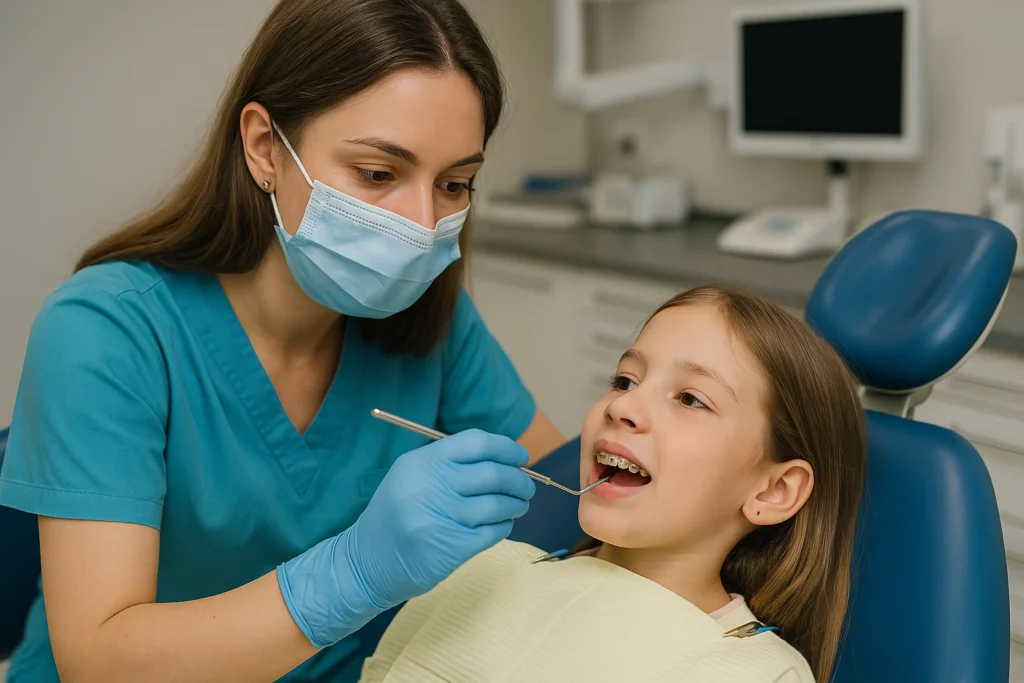
A healthy smile starts in childhood. A timely visit to a pediatric orthodontist in Sofia can prevent future problems with the bite, alignment of teeth, breathing, or development of the jaws. Parents looking for a reliable specialist increasingly turn to clinics with proven experience and modern equipment, such as OrthoSmile.
When should you take your child to an orthodontist?
Specialists recommend that the first check-up be conducted around the age of 7. At this stage, there is already a combination of baby and permanent teeth, which allows for early detection of improper bite, diagnosis of crowded, crooked, or rotated teeth, monitoring of jaw growth, detection of harmful habits such as mouth breathing or improper swallowing, as well as planning of early intervention if necessary. Early diagnosis often means shorter, gentler, and more effective treatment.
The most common pediatric orthodontic problems
Crossbite, open bite, or deep bite
These types of improper bite are among the most common reasons parents seek a pediatric orthodontist. A crossbite can lead to asymmetric growth of the jaws, as the lower jaw shifts to the side when biting. An open bite makes normal chewing difficult and is often associated with habits such as thumb sucking or improper swallowing. A deep bite, in which the upper teeth almost completely cover the lower ones, can provoke jaw pain, wear of the teeth, and even changes in the facial profile. Early diagnosis allows for gentler correction, and in some cases, the complete avoidance of more complex treatments in the future.
Crooked or crowded teeth
When teeth do not have enough space or erupt at an incorrect angle, crowding, overlapping, or rotation is often observed. This is usually the result of narrow jaws, genetic predisposition, or early loss of baby teeth. Irregular alignment not only creates aesthetic discomfort but also makes cleaning difficult, which increases the risk of cavities and gum inflammation. The orthodontist can determine whether jaw expansion or alignment of the teeth through braces or aligners is necessary.
Bad habits
Some habits can significantly affect the development of a child’s bite. Common examples are prolonged thumb or pacifier sucking, placing the tongue between the teeth when swallowing, clenching the teeth, or mouth breathing. These factors can lead to an open bite, protruding front teeth, improper alignment, and difficulty speaking. The pediatric orthodontist works together with speech therapists and oral habit specialists to help the child overcome them and prevent long-term consequences.
Improper jaw development
In some children, the upper or lower jaw grows excessively or insufficiently, which leads to imbalance and improper bite. At an early age, these problems can be corrected with functional appliances that guide the growth of the jaws and support normal development. This is key because timely intervention avoids more complex orthodontic and surgical procedures later. Regular check-ups allow the specialist to monitor development and suggest the most appropriate time for treatment.
What appliances and methods are used for children?
Functional appliances
They are one of the most effective solutions for young children, especially when there are problems with jaw development. These appliances work by guiding jaw growth in the right direction, correcting the bite, and creating a suitable environment for the alignment of permanent teeth. Functional appliances are non-invasive, gentle, and in many cases avoid the need for serious treatment during the teenage years.
Fixed braces – metal and aesthetic
Braces are the classic means of correcting crooked or crowded teeth. They are suitable for children and teenagers when all permanent teeth have already erupted. Metal braces are durable and effective, while aesthetic ones (ceramic or sapphire) offer a more discreet appearance. Treatment with braces is precise and allows for the restoration of the proper bite and perfect alignment of the teeth.
Clear aligners
They are a series of clear, removable trays that gradually move the teeth into the desired position. Clear aligners are a popular choice for older children and teenagers when the case does not require heavy correction. Their advantage is that they are practically invisible, easy to clean, and comfortable to wear. They are suitable for cases of mild to moderate misalignment or crowding.
Expander (jaw expander)
The expander is an appliance that gradually widens the upper jaw when it is too narrow. This creates the necessary space for permanent teeth and improves the relationship between the upper and lower jaw. Effectiveness is greatest in childhood, when the jaw bones are still developing. This is one of the most important early appliances in orthodontics because it often prevents the need for tooth extraction or more complex treatment in the future.
How to choose a good pediatric orthodontist in Sofia?
Choosing the right pediatric orthodontist is key to successful treatment and the child’s peace of mind. First and foremost, it is important that the specialist has experience with children and knows how to communicate with them in a calm, attentive, and friendly manner. This builds trust and reduces fear during the first visits.
Another important factor is the availability of modern equipment and contemporary technologies such as 3D scanners, digital images, and various convenient appliances. This not only speeds up diagnosis but also improves the accuracy and quality of treatment.
It is good for the clinic to be in a convenient location in Sofia, so that regular check-ups can take place without difficulty. Positive reviews from other parents are also a valuable guide — real experience always provides the most accurate impression of the team’s professionalism.
In addition, a professional pediatric orthodontist should offer a clear, structured treatment plan. They should explain all the steps, the expected duration, and the projected results. Clinics like OrthoSmile are an example of a place that successfully combines experience, modern equipment, and an individual approach to each child.
How does the first check-up proceed?
The first check-up begins with a brief conversation between the orthodontist, the parent, and the child to understand the complaints, habits, and expectations. The specialist then performs an examination of the teeth and bite to identify visible deviations or problems. If necessary, photos or X-rays are taken, which provide a more complete picture of the position of the teeth and the development of the jaws. This is followed by an analysis of the overall condition — shape of the jaws, alignment of the teeth, potential risks, or deviations. Finally, the orthodontist prepares an individual treatment or monitoring plan. The procedure is calm and completely painless, and the goal is for the child to feel protected, comfortable, and confident.
Conclusion
If you are looking for a reliable pediatric orthodontist in Sofia, the most important thing is to start with a timely consultation. You can find more information and book an appointment with a proven orthodontist. Timely care today means a healthy smile tomorrow.